Free soccer playbook
Eleven soccer plays, one to a page, each drawn on a real pitch. A 4-3-3 to start from, a two-against-one, a kick-off routine, a throw-in, three free kicks, three attacking corners and a zonal corner defence, with a line on when to use each one and what every player does. Print it tonight, or open any play in Playmaker and change it.
Free, no account, nothing to install. Soccer playbook, 11 plays, US Letter. Draw your own play opens a soccer pitch in Playmaker, free and with no account.
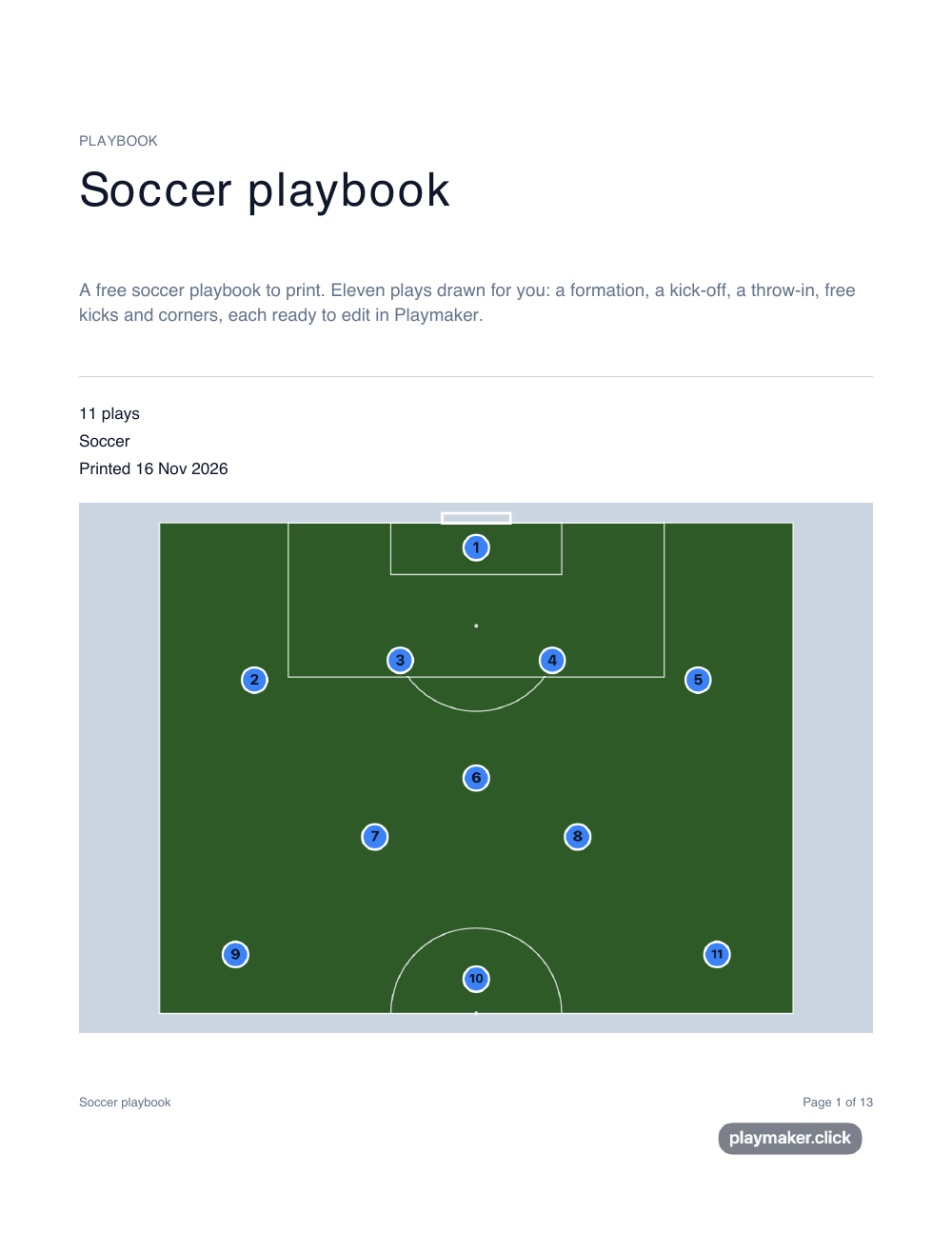
The 11 plays in this playbook
In the order they print. Open any play in Playmaker to watch it run, change it and share it with your team.
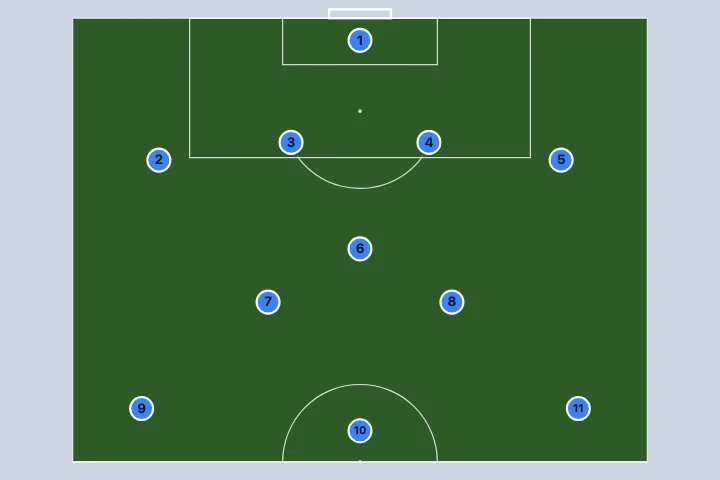
1. 4-3-3
When to call it: Your base shape for open play, and where everyone stands when the game restarts.
Who does what: A back four, one holding midfielder with two midfielders ahead of him, and a front three. The wingers stay wide on the touchlines so the full backs have room to overlap.
Open this play in Playmaker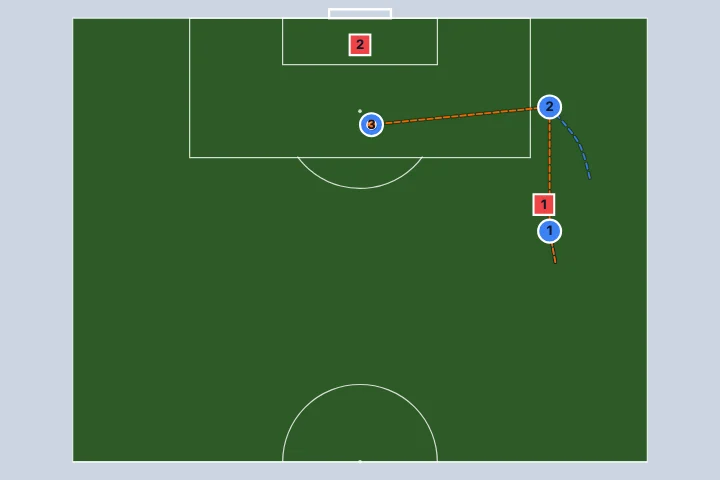
2. Two against one, wide
When to call it: In open play, whenever a full back and a winger find one defender between them near the box.
Who does what: The full back carries the ball at the defender. The winger runs past him on the outside. Hold the pass until the defender commits to the ball, then play the winger in, and he crosses for the striker.
Open this play in Playmaker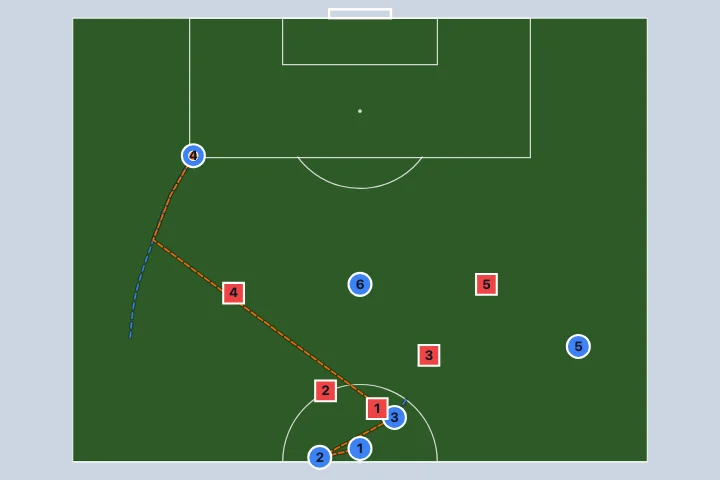
3. Kick-off switch
When to call it: Every kick-off, especially against a young team where everybody runs at the ball.
Who does what: Two touches in the middle and one long pass to the winger on the far side. The taker plays it short, the next player lays it back, and the holder switches it out wide while the other team is still running at the middle.
Open this play in Playmaker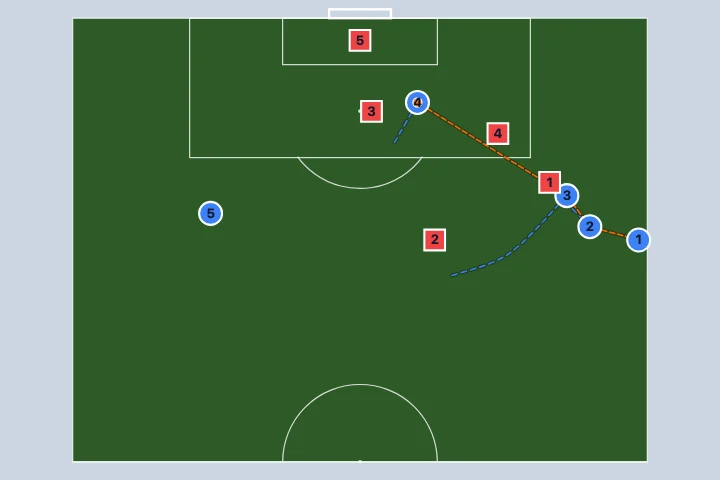
4. Throw-in third man
When to call it: Any throw-in in the other team's half, when the defender is standing close to your nearest player.
Who does what: The nearest player comes short for the throw and lays it off first time. His defender follows him, the midfielder runs round the outside into the space he has just left, and finds the striker.
Open this play in Playmaker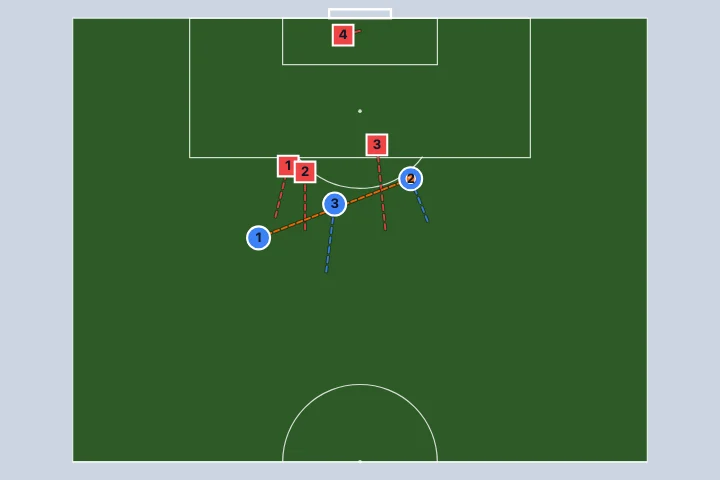
5. Quick free kick
When to call it: A free kick within shooting range, when the other team turns its back to set a wall. Take it before they are ready.
Who does what: The taker plays it straight away to the striker, who has come to the edge of the box in front of the retreating defenders. The striker shoots before anyone has set.
Open this play in Playmaker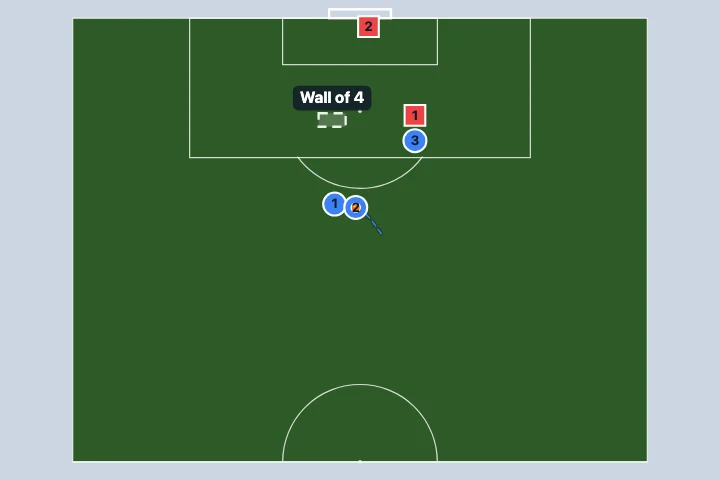
6. Lay-off round the wall
When to call it: A central free kick just outside the box, with the wall covering the near post.
Who does what: The taker rolls it two or three metres to the side. The shooter runs onto it and shoots with a clear line to goal outside the end of the wall.
Open this play in Playmaker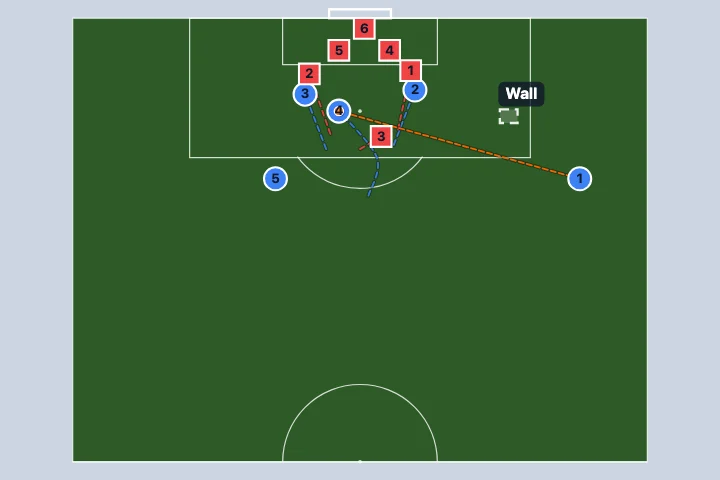
7. Wide free kick
When to call it: A free kick out wide, level with the box or just outside it.
Who does what: Two runners take their markers to the near and far posts. The third starts deep and arrives late in the space they left, beyond the penalty spot. Nobody runs beyond the last defender before the kick, so nobody is offside.
Open this play in Playmaker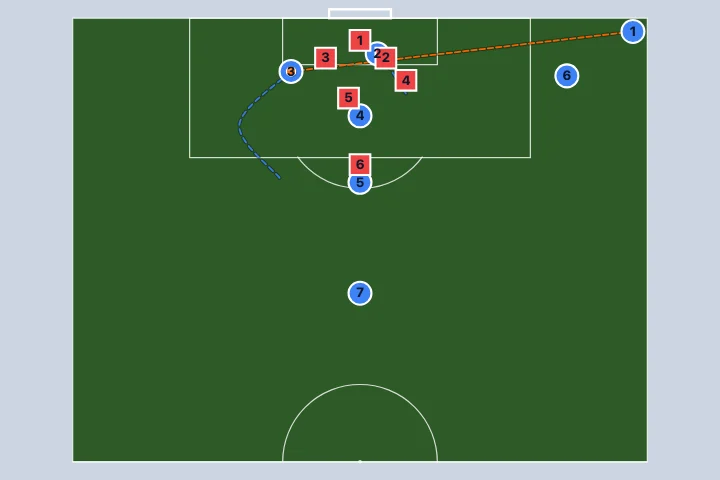
8. Back-post corner
When to call it: Your first corner of the game, aimed at the back post.
Who does what: One runner attacks the near post to take the first defender with him. The second checks away and comes back to the far post, which is where the ball is going. One player stays back in case they break.
Open this play in Playmaker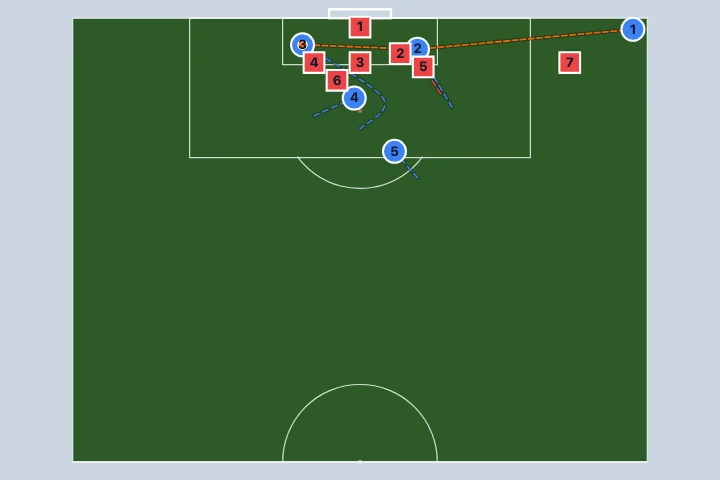
9. Near-post flick-on
When to call it: Against a team that packs the middle of the box.
Who does what: An in-swinging corner to the near post. One runner attacks it and glances it on. A second runner checks off his marker and arrives at the back post, and a decoy run to the penalty spot holds the middle defenders.
Open this play in Playmaker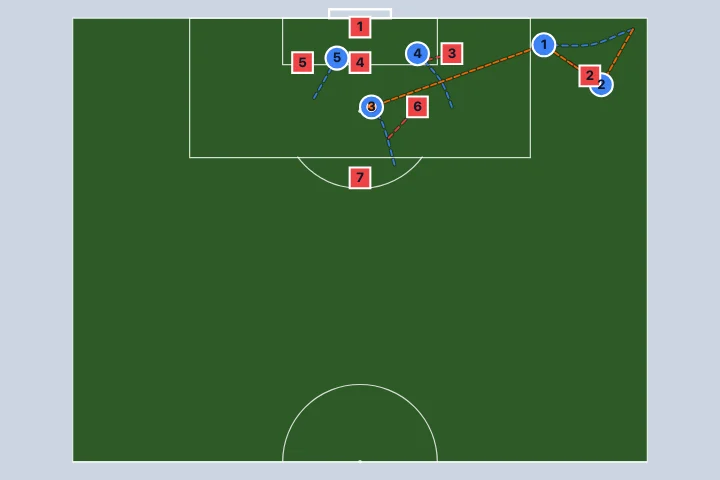
10. Short corner
When to call it: Against a team with tall defenders who win every cross into the box.
Who does what: The taker plays it short to a team-mate and runs infield along the goal line. The ball comes back to him, and he cuts it back to a runner arriving at the penalty spot while the defence is still facing the corner flag.
Open this play in Playmaker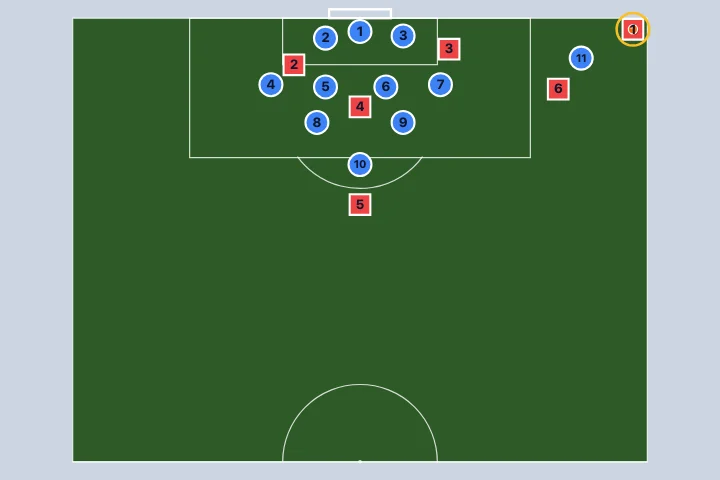
11. Defending corners, zonal
When to call it: Every corner against you. Each player defends a space, not a person.
Who does what: The goalkeeper on his line, a player on each post, four across the six-yard line, two on the penalty spot, one on the edge of the box and one out to press the taker. Attack the ball in your zone.
Open this play in Playmaker
How to use this playbook
Print it at actual size
Print on US Letter or A4 with fit to page switched off. There is a cover, a contents page and one page per play, so it goes in a binder or on a clipboard.
Pick your set pieces
You do not need all eleven at once. Pick one corner, one free kick and the throw-in for your next game, and leave the rest for later in the season.
Walk them through at training
Set each one up with cones where the players stand, walk it through slowly, then run it at speed against defenders. Ten minutes a routine is enough.
Give each one a name
Every play has a number on the contents page. Give each set piece a short name or a number your taker can shout, so everyone knows which one is on.
Change any play in Playmaker
Open a play in Playmaker, move the players to suit your team and press play to watch it run. Share it with your players as a link.
Download the playbook
Want a play that is not in here? Draw it in the a play creation tool built for coaches and press play to watch it run.
A soccer playbook for the moments you can plan
Most of a soccer game cannot be scripted. The restarts can. A youth team takes a kick-off, a dozen throw-ins, a handful of free kicks and corners every game, and a team that has practised a few of them scores from them. This free soccer playbook has eleven plays for those moments, plus the formation everyone starts from and the two-against-one that wins most open-play goals at youth level.
It runs in the order you would use it: the 4-3-3 first, then the two-against-one, then the restarts from kick-off to corners, and the zonal corner defence last, so your team knows what to do when the corner is against you.
How the playbook is laid out
The PDF has a cover, a contents page that numbers every play, and then one page per play. Each page has the play drawn on a real pitch, the play's name in large type, and the notes: when to use it, then what each player does. Under the notes there are ruled lines for your own.
The same eleven plays are on this page, each with the picture from the PDF and an Open this play in Playmaker link. That opens the play on the pitch in the play creation tool. The set pieces open already moving, and the formation and the corner defence open as a starting picture to draw on. It is free, with no account.
Teaching set pieces
Set them up at training with cones where each player starts, walk them through slowly, and only then run them at speed against defenders. Ten minutes a routine is enough, and one new routine a week is plenty. Pick a taker who can hit the ball where the play needs it. A back-post corner with a taker who cannot reach the back post is a short corner, so choose the routines your taker can deliver.
Our guides go further: five soccer set pieces for under-12s, soccer corner kick plays and soccer free kick routines each animate the plays in this book.
Make it yours
A printed playbook is a starting point. Your tallest player belongs at the back post, and your quickest belongs on the late run in the wide free kick. Open any play in the soccer play designer, move the players to suit your team, and share it with your players as a link they can open on a phone. Sign in and you can save the plays into a playbook of your own: the free plan saves a few plays, and Pro saves as many as you draw and prints your own playbook with your team colours and crest.
If you coach 7v7 or 9v9, the soccer formations page has the small-sided shapes, and the soccer practice plan template plans the session you teach these in.
Common questions
Is the soccer playbook free?
Yes. It is free to download and print, with no account and no email address. Each page has a small Playmaker mark at the foot.
What age is this soccer playbook for?
The set pieces work from about under-10 upwards. The formation is drawn for eleven a side. For younger teams, keep the throw-in and the kick-off routine and choose one corner.
How many set pieces should a youth team learn?
Two or three at a time. One corner, one free kick and the throw-in are enough for a young team, and you can add more as the season goes on.
Can I change the plays?
Yes. Every play opens in Playmaker, where you can move any player, draw the runs and passes and press play to watch it run. Print your version from there, or share it with your team as a link.
Does it work for 7v7 or 9v9?
The set pieces carry over to small-sided games with fewer runners. Open a play in Playmaker and take out the players you do not have. The 4-3-3 is an eleven-a-side shape.
More free printable templates
- Football wristband template
- Flag football wristband template
- Football call sheet template
- Soccer practice plan template
- Basketball practice plan template
- Football practice plan template
- Netball practice plan template
- Volleyball practice plan template
- Rugby practice plan template
- Field hockey practice plan template
- Baseball practice plan template
- Volleyball rotation sheet
- Youth soccer rotation template
- Basketball scouting report template
- Football scouting report template
- Soccer scouting report template
- Football scout card template
- Volleyball scouting report template
- Netball scouting report template
- Rugby scouting report template
- Field hockey scouting report template
- Baseball scouting report template
- Free flag football playbook
- Free basketball playbook
- Free rugby playbook
Make the playbook yours
Change any play to suit your team, or draw the ones that are not in here, and press play to watch them run. Free, with no account.
Draw your own playPage updated · All templates