Free basketball playbook
Eleven basketball plays, one to a page, each drawn on a real court. Four half-court sets, three plays to beat a 2-3 zone, two inbound plays, a press break and the 2-3 zone itself, with a line on when to call each one and what every player does. Print it tonight, or open any play in Playmaker and change it.
Free, no account, nothing to install. Basketball playbook, 11 plays, US Letter. Draw your own play opens a basketball court in Playmaker, free and with no account.
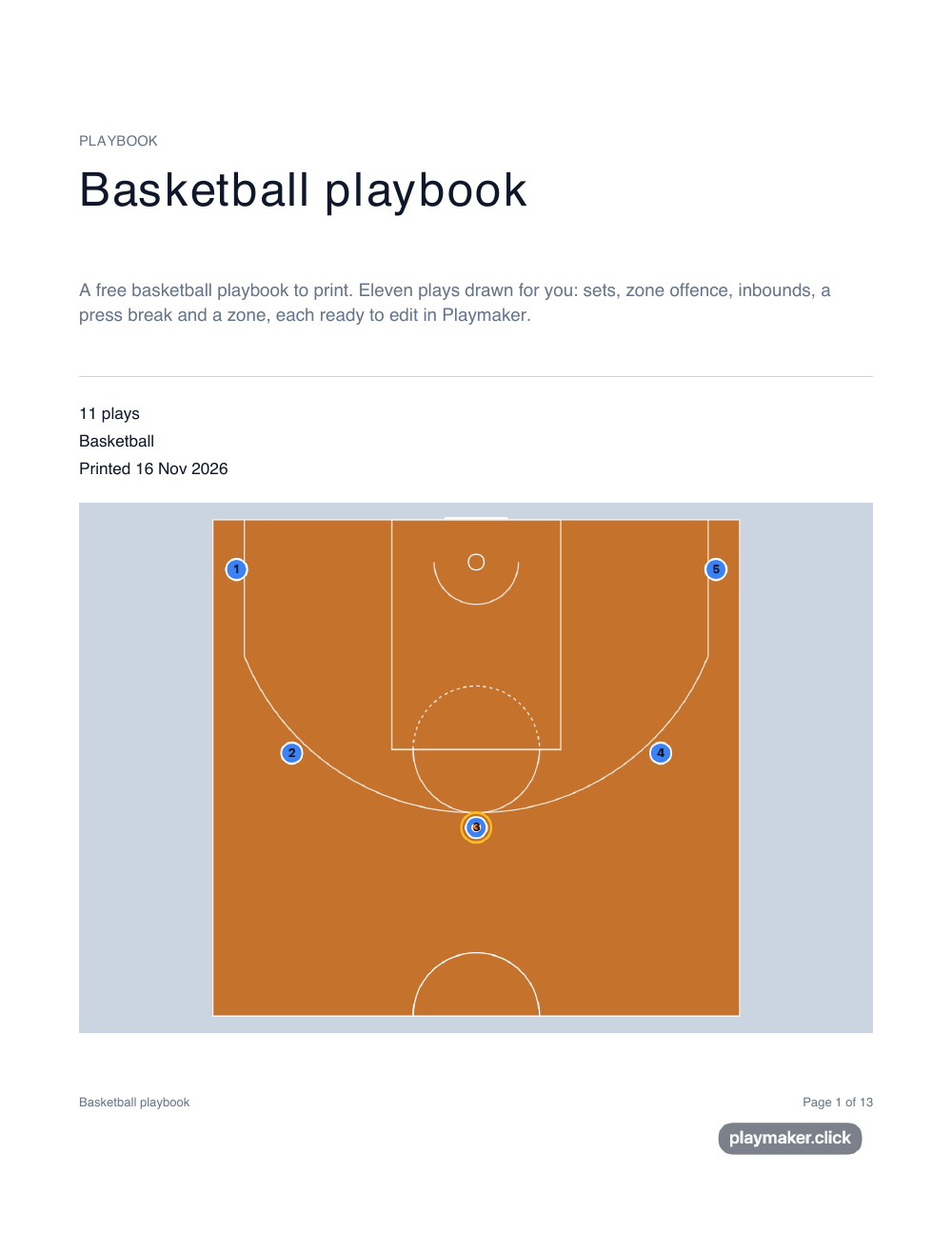
The 11 plays in this playbook
In the order they print. Open any play in Playmaker to watch it run, change it and share it with your team.
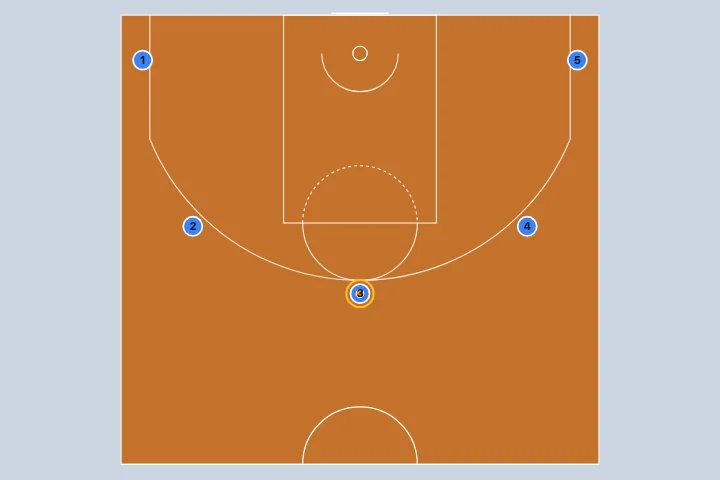
1. 5-out
When to call it: Your base offence, and the first thing to teach. Run it whenever you have no set called.
Who does what: All five stand outside the three-point line: both corners, both wings and the top of the key. The lane is empty, so anyone can drive or cut into it. Pass, cut to the basket, and fill the spot that is empty.
Open this play in Playmaker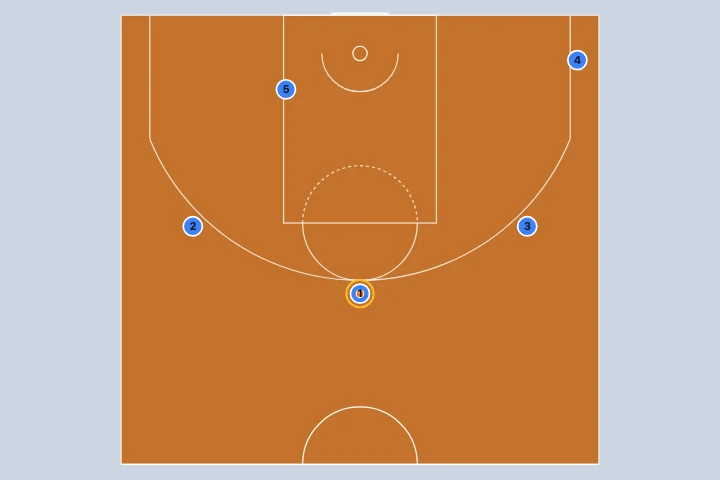
2. 4-out 1-in
When to call it: When you have one player who scores close to the basket and you want the ball inside.
Who does what: Four players spaced round the arc and your post on the left block. The post seals his defender and calls for the ball. The four outside players pass until the entry to the post is open.
Open this play in Playmaker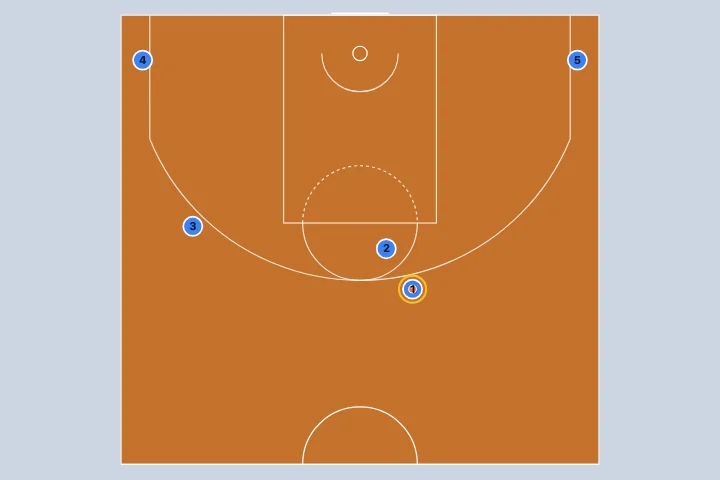
3. High pick and roll
When to call it: Late in the shot clock, or any time your best ball handler needs a play.
Who does what: The screener steps up to set a screen for the ball handler above the arc. The ball handler drives off it, the screener rolls to the basket, and the three others fill both corners and the weak-side wing so nobody can help.
Open this play in Playmaker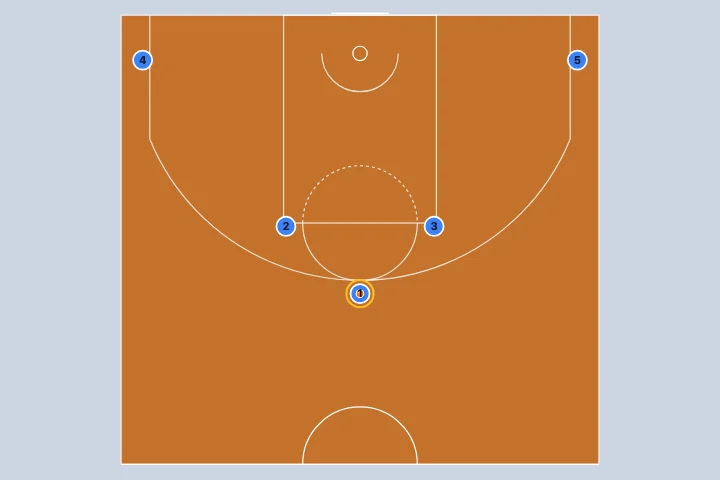
4. Horns
When to call it: Out of a timeout, or as your first play of the half. Every horns option starts from this one picture.
Who does what: Two bigs at the elbows, two shooters in the corners and the point guard at the top. The point guard picks a big to pass to or a big to screen for him, and the corners stay wide.
Open this play in Playmaker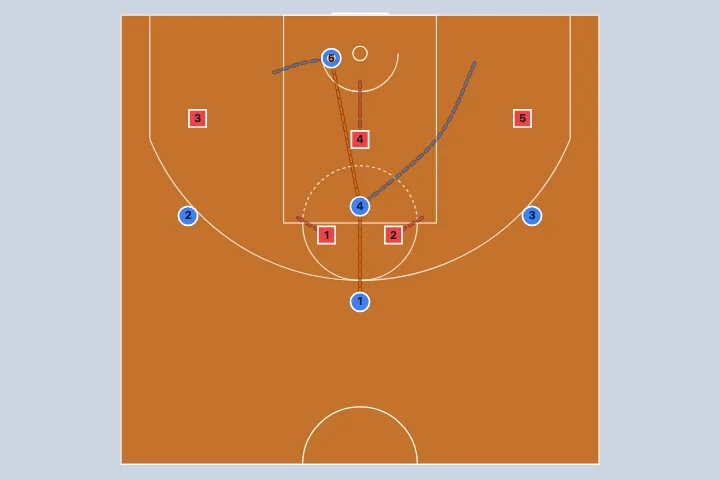
5. Zone high-post flash
When to call it: Against a 2-3 zone, as the first thing you run at it.
Who does what: The 4 flashes from the short corner into the gap at the free-throw line, between the two guards of the zone. When the middle of the zone steps up to him, the 5 seals behind and the 4 drops it in for a layup.
Open this play in Playmaker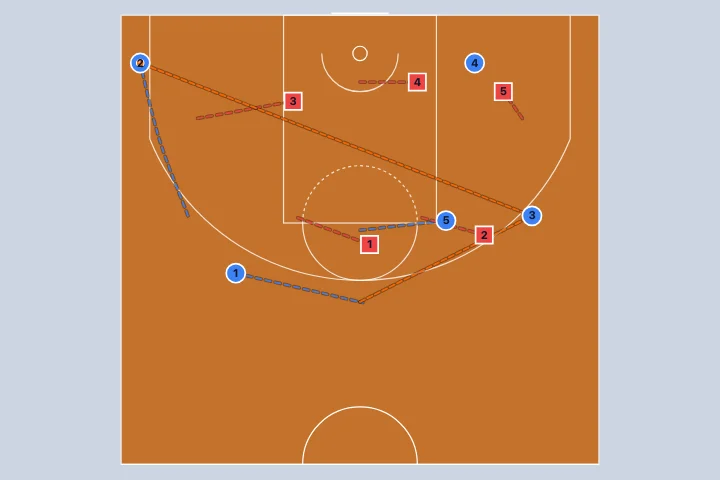
6. Zone overload skip
When to call it: Against a 2-3 zone that is shifting well, to make it shift too far.
Who does what: The wing, the short corner and the 5 stepping out to the right elbow pull the zone to the right. The left wing drifts to the corner behind the zone, and the right wing throws the skip pass over the top for an open corner three.
Open this play in Playmaker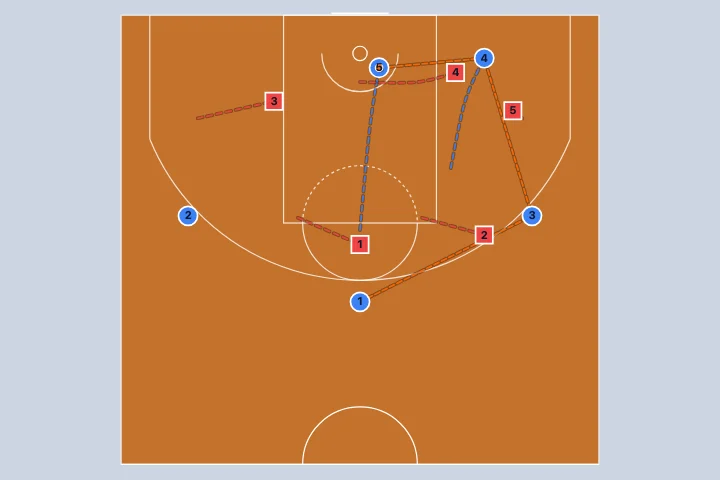
7. Zone short corner
When to call it: Against a 2-3 zone when the middle of it is staying home.
Who does what: The ball goes to the wing and the 4 drops into the short corner. The middle of the zone has to step out to him, so the 5 dives from the high post into the space he left and finishes at the rim.
Open this play in Playmaker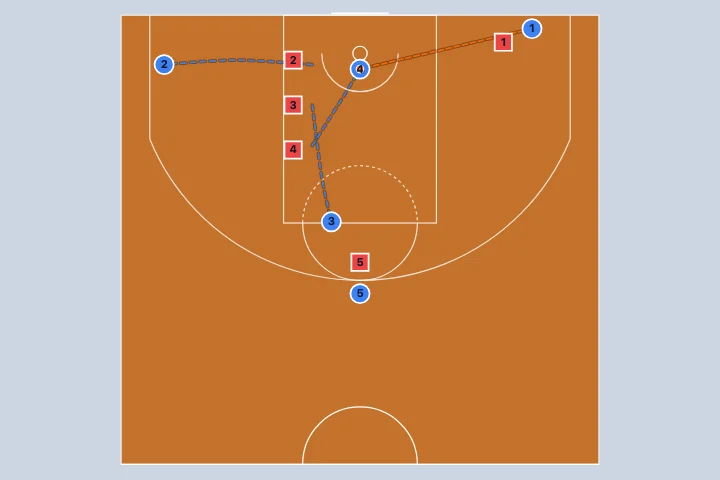
8. Baseline stack
When to call it: Inbounding under your own basket, when you need a quick score.
Who does what: Three players stand in a line on the lane. The front man cuts to the corner as a decoy, the middle man pops out to the top as the safe pass, and the back man, the last one out of the stack, cuts to the basket for the layup.
Open this play in Playmaker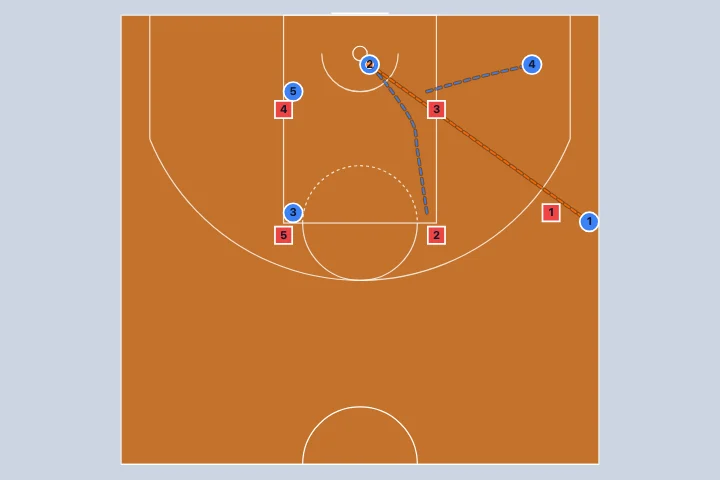
9. Box sideline
When to call it: Inbounding from the sideline in your front court.
Who does what: Four players in a box. The high player screens for the low one, the low one clears to the corner, and the screener turns to the basket. He is the one who ends up open at the rim.
Open this play in Playmaker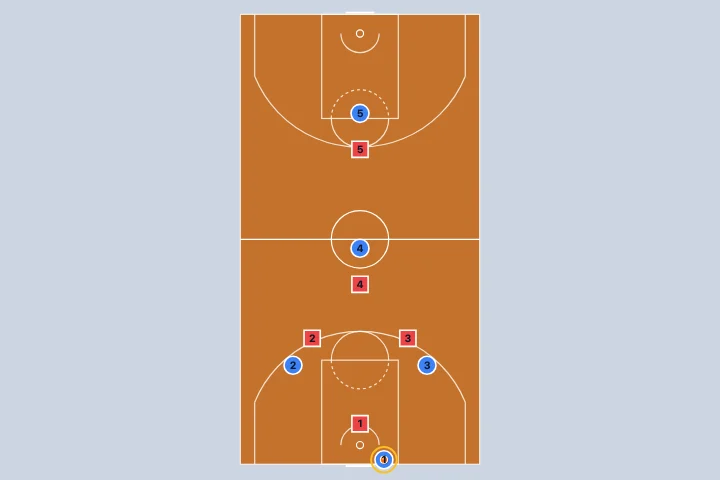
10. Press break
When to call it: When the other team presses you full court after a score.
Who does what: Two guards at the free-throw line extended give the inbounder two targets. The middle stands at half court for the pass over the trap, and the long man waits in the front court for the score.
Open this play in Playmaker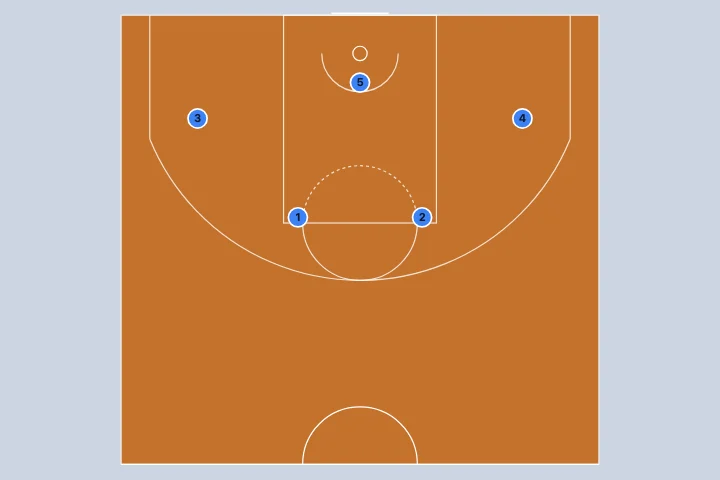
11. 2-3 zone defence
When to call it: Your defence when the other team has better drivers than shooters, or when you are in foul trouble.
Who does what: Two guards at the free-throw line extended and three across the baseline. Everyone moves with the ball: the guards stop the drive and the pass into the middle, and the back three protect the paint and box out.
Open this play in Playmaker
How to use this playbook
Print it at actual size
Print on US Letter or A4 with fit to page switched off. There is a cover, a contents page and one page per play, so it goes in a binder or on a clipboard.
Start with the spacing
Teach 5-out first. Every other set in the book is a change to where those five players stand, so a team that can hold its spacing learns the rest quickly.
Add a play a week
One new play a week is plenty for a youth team. Walk it through, run it against your second unit, then keep it in every scrimmage.
Call them by number
Every play has a number on the contents page. Hold up fingers or shout the number from the bench, and your point guard knows the set.
Change any play in Playmaker
Open a play in Playmaker, move the players to suit your team and press play to watch it run. Share it with your players as a link.
Download the playbook
Want a play that is not in here? Draw it in the a play creation tool built for coaches and press play to watch it run.
A basketball playbook a youth team can actually run
Most free basketball playbooks are thirty plays from a college coach's binder. A youth team needs far fewer: a way to space the floor, a couple of sets, something to run against a zone, something for inbounds, and an answer to the press. This playbook has those eleven, in the order you would teach them.
It starts with 5-out, because every other set is a change to where those five players stand. Then 4-out 1-in and two half-court sets, the high pick and roll and horns. Then three plays that beat a 2-3 zone, which is the defence most youth teams meet. Then the two inbound plays, the press break, and the 2-3 zone itself, so your own team has a defence to play too.
How the playbook is laid out
The PDF has a cover, a contents page that numbers every play, and then one page per play. Each page has the play drawn on a real court, the play's name in large type, and the notes: when to call it, then what each player does. Under the notes there are ruled lines for your own.
The same eleven plays are on this page, each with the picture from the PDF and an Open this play in Playmaker link. That opens the play on the court in the play creation tool. The zone and inbound plays open already moving, and the sets open as a starting picture for you to draw on. It is free, with no account.
Teaching the plays
Teach spacing before plays. A team that holds 5-out spacing learns horns and the pick and roll in a practice, because both are the same five spots with one change. Walk each new play through slowly, then run it against your second unit, and keep it in every scrimmage until nobody has to think about where to stand.
For the zone plays, our guide to basketball plays against a 2-3 zone explains what each one is attacking, and basketball inbound plays that work covers the two inbounds in more detail.
Make it yours
A printed playbook is a starting point. Your best shooter belongs in the corner on the overload skip, and your best passer belongs at the high post on the flash. Open any play in the basketball play designer, move the players to suit your team, and share it with your players as a link they can open on a phone. Sign in and you can save the plays into a playbook of your own: the free plan saves a few plays, and Pro saves as many as you draw and prints your own playbook with your team colours and crest.
For more starting pictures, the basketball formations page compares the common sets, and the basketball practice plan template plans the practice you teach them in.
Common questions
Is the basketball playbook free?
Yes. It is free to download and print, with no account and no email address. Each page has a small Playmaker mark at the foot.
How many plays does a youth basketball team need?
Fewer than you think. A spacing offence, two or three sets, one answer to a zone, an inbound play for each end and a press break is a season's worth for most youth teams.
What age is this playbook for?
It is written for youth and school teams, roughly ten to sixteen. The sets work at any level, and the zone plays and inbounds are the ones high school teams run every week.
Can I change the plays?
Yes. Every play opens in Playmaker, where you can move any player, draw the cuts and passes and press play to watch it run. Print your version from there, or share it with your team as a link.
Does it fit on one page?
Each play has a page of its own, so the plays print large enough to read from across a huddle. The whole playbook is thirteen pages with the cover and the contents.
More free printable templates
- Football wristband template
- Flag football wristband template
- Football call sheet template
- Soccer practice plan template
- Basketball practice plan template
- Football practice plan template
- Netball practice plan template
- Volleyball practice plan template
- Rugby practice plan template
- Field hockey practice plan template
- Baseball practice plan template
- Volleyball rotation sheet
- Youth soccer rotation template
- Basketball scouting report template
- Football scouting report template
- Soccer scouting report template
- Football scout card template
- Volleyball scouting report template
- Netball scouting report template
- Rugby scouting report template
- Field hockey scouting report template
- Baseball scouting report template
- Free flag football playbook
- Free soccer playbook
- Free rugby playbook
Make the playbook yours
Change any play to suit your team, or draw the ones that are not in here, and press play to watch them run. Free, with no account.
Draw your own playPage updated · All templates