Free rugby playbook
Eleven rugby union plays, one to a page, each drawn on a real pitch. Your attacking shape, two lineout moves, a scrum move, three kick-off plays and two defensive shapes, with a line on when to use each one and what every player does. Every pass goes backwards, as the laws say. Print it tonight, or open any play in Playmaker and change it.
Free, no account, nothing to install. Rugby playbook, 11 plays, US Letter. Draw your own play opens a rugby pitch in Playmaker, free and with no account.
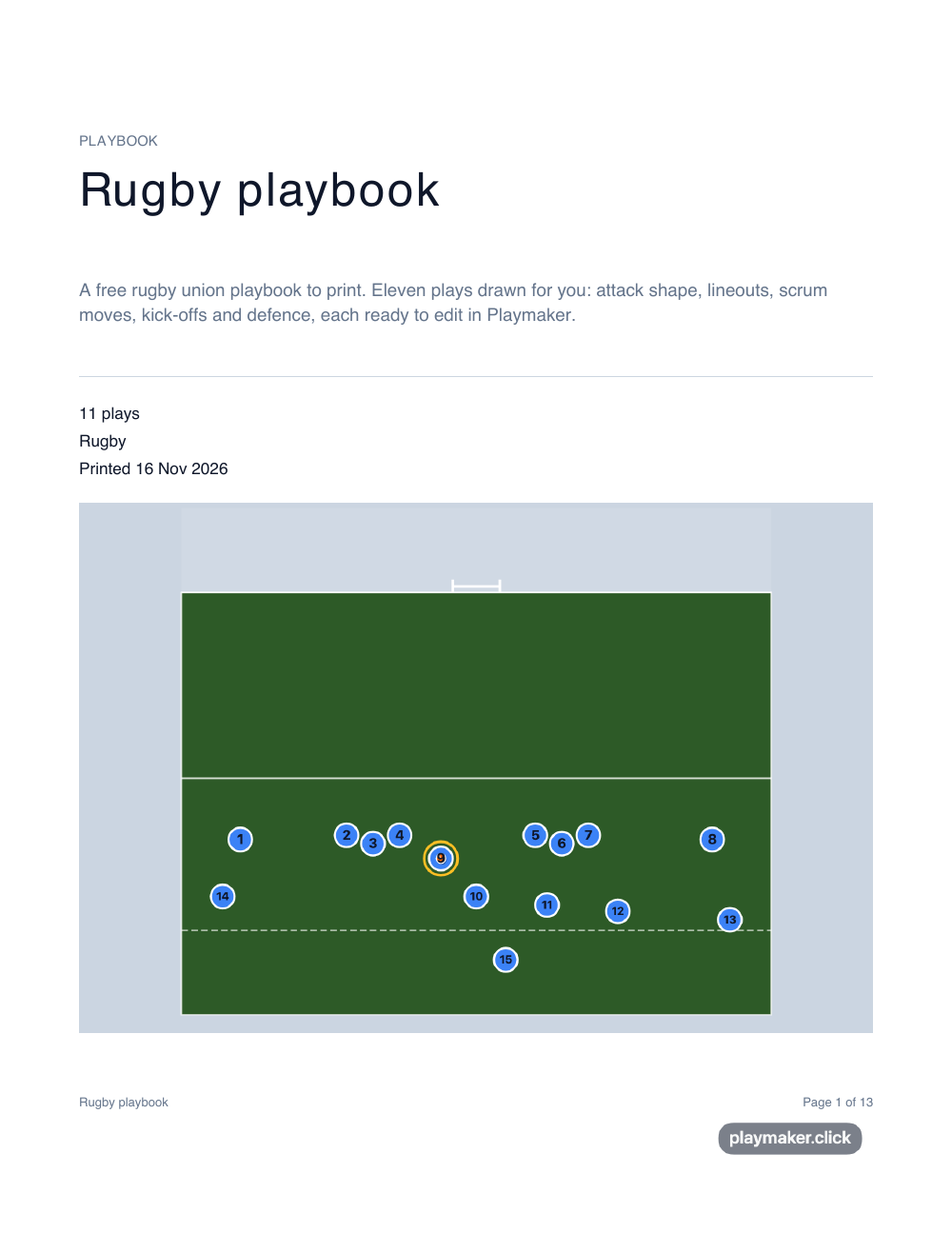
The 11 plays in this playbook
In the order they print. Open any play in Playmaker to watch it run, change it and share it with your team.
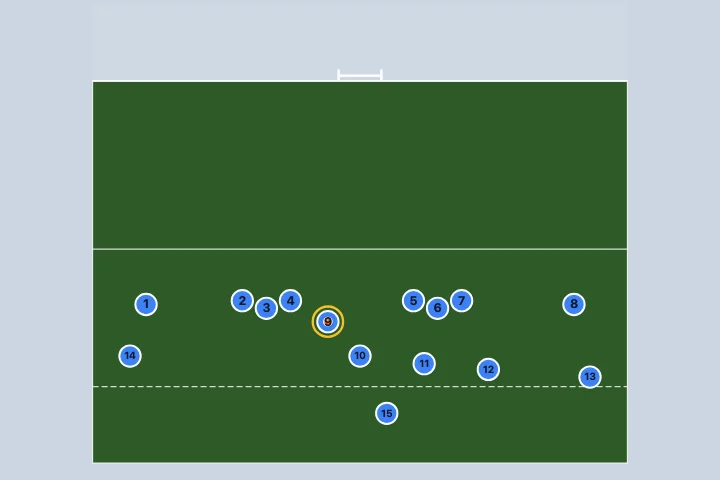
1. Attacking pods 1-3-3-1
When to call it: Your attacking shape in open play, and where your forwards go after every set piece.
Who does what: One forward in each 15 m channel and two pods of three between them, with the halves, centres and back three behind. There is always a pod on both sides of the ruck to carry the next phase.
Open this play in Playmaker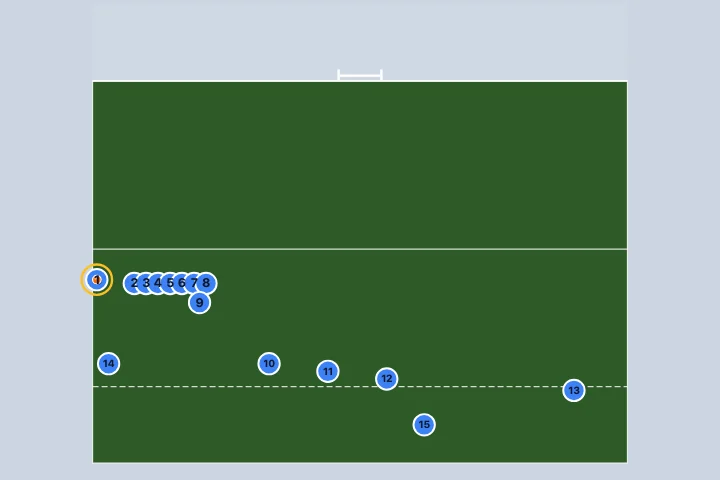
2. Lineout, seven-man
When to call it: Every attacking lineout. This is where everyone stands before the throw.
Who does what: The hooker throws in from the touchline. Seven forwards stand between the 5 m and 15 m lines, the scrum-half two metres behind the tail, and the backs at least 10 m back from the line of touch.
Open this play in Playmaker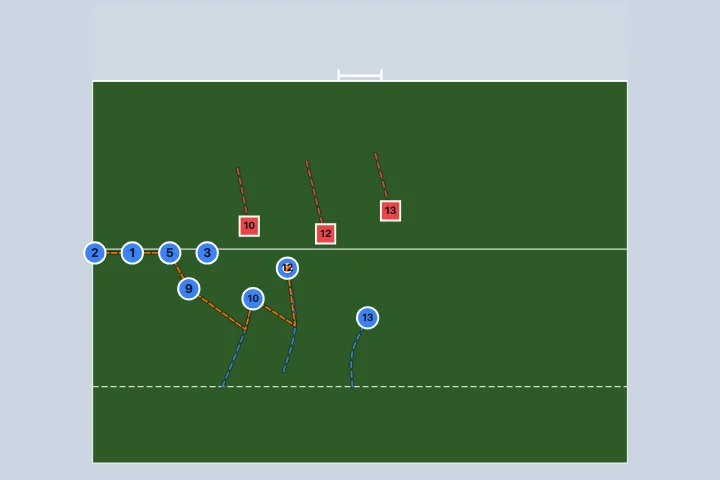
3. Lineout off the top
When to call it: A lineout in their half, when you want quick ball for the backs.
Who does what: The jumper in the middle taps the ball straight down to the scrum-half. The fly-half runs onto it flat from ten metres back, and the inside centre arrives on a short line behind him. Every pass goes backwards.
Open this play in Playmaker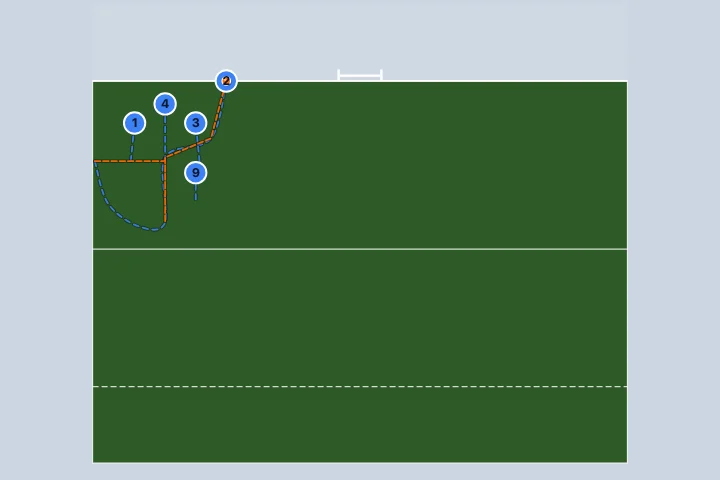
4. Lineout maul and peel
When to call it: A lineout inside their 22, when your pack is stronger than theirs.
Who does what: The jumper takes the throw and the lifters drive in round him to set the maul. The hooker joins at the back and takes the ball, the maul drives, and the hooker peels off the side to score.
Open this play in Playmaker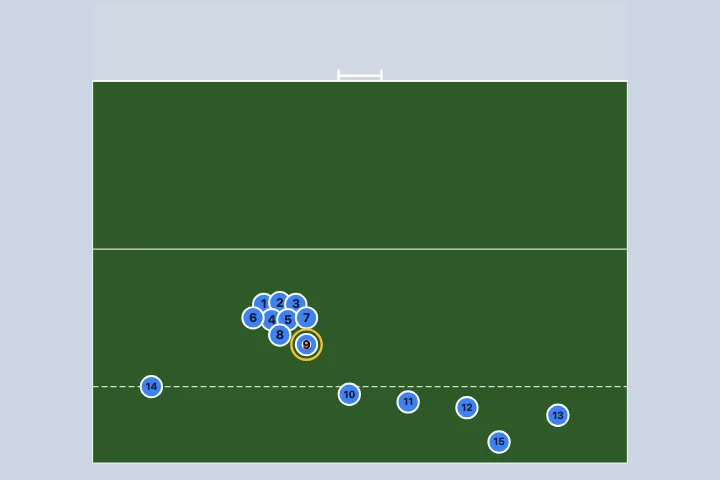
5. Scrum backline
When to call it: Every attacking scrum. This is where the backs stand before the ball comes out.
Who does what: Eight forwards bound into the scrum and the scrum-half at the base. The backline fans out to the open side about 8 m apart, the fly-half 10 m off the gain line, with the blindside wing and the fullback covering behind.
Open this play in Playmaker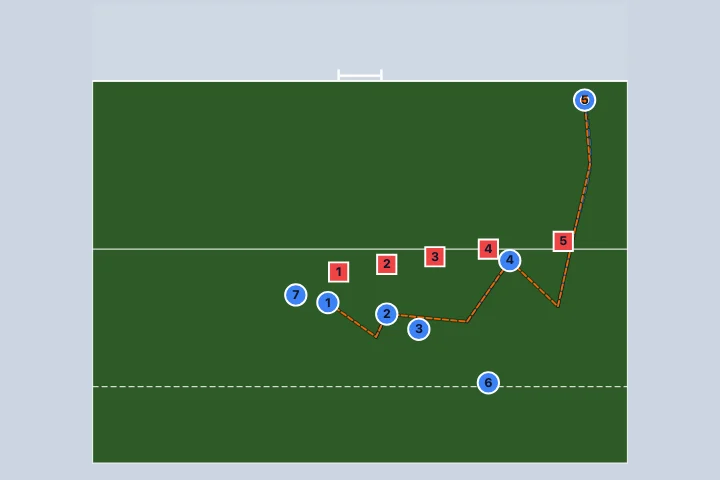
6. Miss two
When to call it: A scrum in midfield, against a defence that drifts.
Who does what: The scrum-half passes to the fly-half. The fly-half throws the long pass two players out, behind the inside centre, to the outside centre. The outside centre draws the last defender and the winger arrives outside him.
Open this play in Playmaker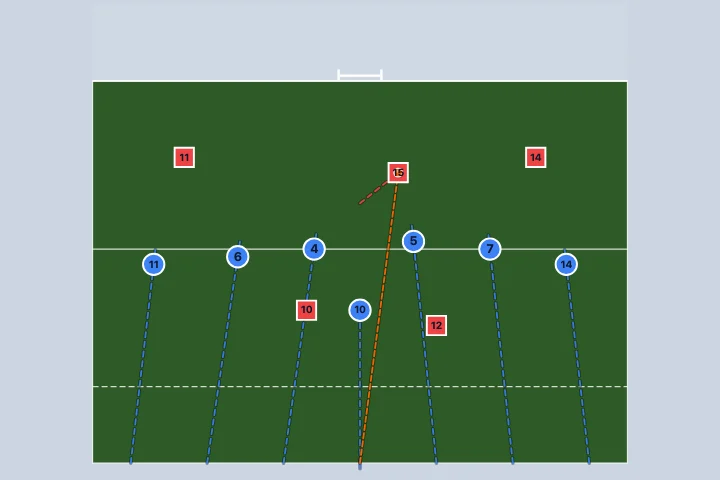
7. Long kick-off and chase
When to call it: Kicking off, when their back three are quick and you want them to kick it back from deep.
Who does what: The fly-half kicks long to their fullback inside the 22. The chase line goes up together and flat, the full width of the pitch, so the catcher has nowhere to run.
Open this play in Playmaker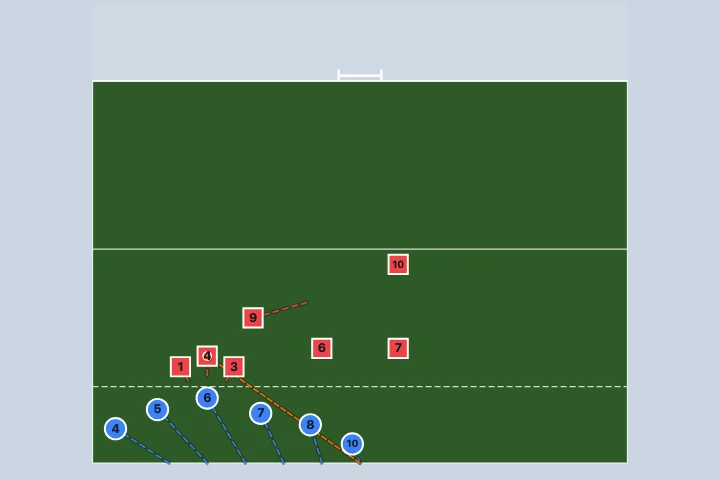
8. Short kick-off
When to call it: Kicking off, when your chasers are quicker than their forwards.
Who does what: The fly-half kicks short to the left, just past the 10 m line, onto their forwards. Their jumper has to catch it going backwards with your chasers arriving, and the chase fans out so the catcher has nobody to pass to.
Open this play in Playmaker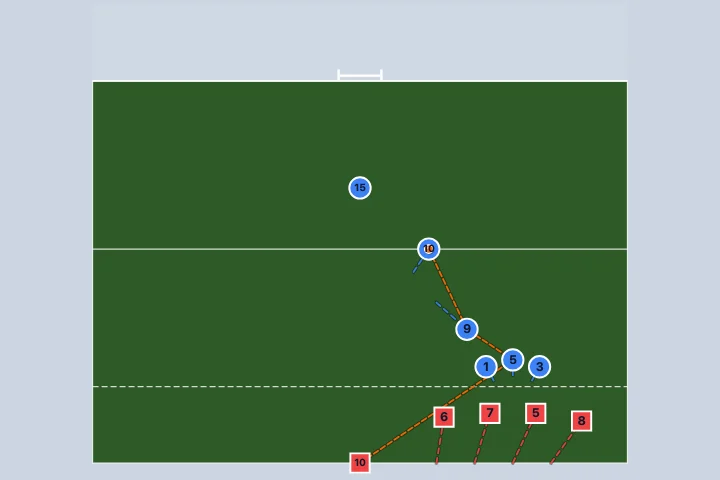
9. Receiving: catch and clear
When to call it: Every kick-off against you.
Who does what: The pod lifts the jumper behind the 10 m line. The jumper takes the kick-off and gives it back to the scrum-half, and the scrum-half passes to the fly-half standing deep in the pocket, who kicks it out.
Open this play in Playmaker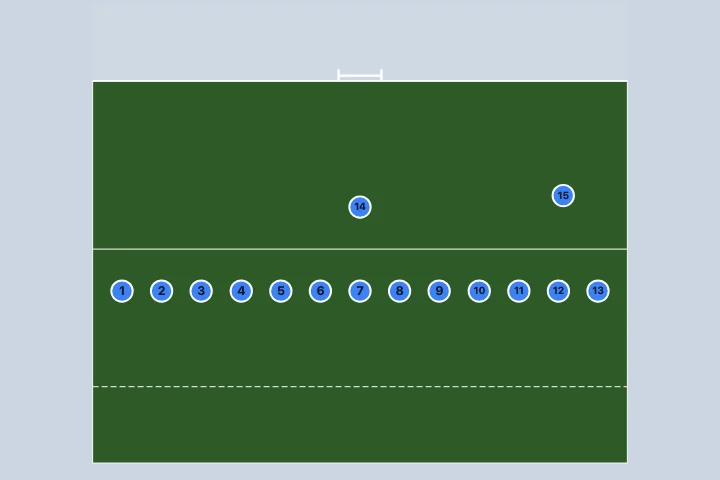
10. Defensive line
When to call it: Your defensive shape from any phase in the middle of the pitch.
Who does what: Thirteen players in the front line about 5 m apart, right across the pitch, with the fullback sweeping behind and the blindside wing holding the back field. Come up together, and nobody goes alone.
Open this play in Playmaker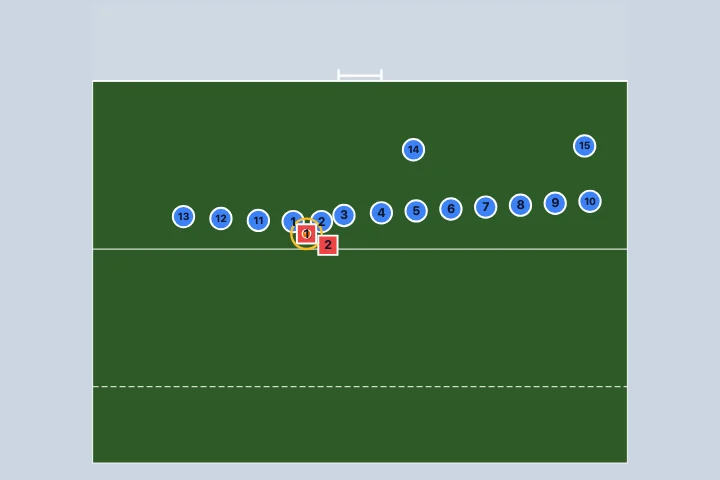
11. Ruck defence
When to call it: Every ruck you defend. Fill these jobs first, then the line.
Who does what: Two pillars either side of the ruck and the post defender next out. Seven spread across the open side, three cover the blind side, and the fullback and a wing sweep behind.
Open this play in Playmaker
How to use this playbook
Print it at actual size
Print on A4 or US Letter with fit to page switched off. There is a cover, a contents page and one page per play, so it goes in a binder or on a clipboard.
Start with the shapes
Teach the attacking pods and the defensive line first. Every set piece in the book ends with the team back in one of those two shapes.
Give each set piece a call
Every play has a number on the contents page. Give each lineout and scrum move a call your hooker or nine can shout, so the forwards and the backs know it together.
Walk it, then run it
Walk each move through at half pace with the whole fifteen, then at full pace against a defence. One new set piece a week is plenty.
Change any play in Playmaker
Open a play in Playmaker, move the players to suit your team and press play to watch it run. Share it with your players as a link.
Download the playbook
Want a play that is not in here? Draw it in the a play creation tool built for coaches and press play to watch it run.
A rugby playbook built round set piece
Most of what a rugby team can plan happens at set piece. Lineouts, scrums and kick-offs restart every game dozens of times, and a team that knows what it is doing at each one wins the ball and the territory that come from them. This free rugby playbook has eleven plays for rugby union fifteens: your attacking shape, two lineout moves, a scrum move, three kick-off plays and two defensive shapes.
Every play is legal under World Rugby's laws. Every pass goes backwards or flat. The lineout stands between the 5 m and 15 m lines with the backs 10 m back, and the scrum-half waits at the base of the scrum until the ball is out. The kick-offs go past the 10 m line.
How the playbook is laid out
The PDF has a cover, a contents page that numbers every play, and then one page per play. Each page has the play drawn on a real pitch with the 22, the 10 m lines and the 5 m and 15 m lines, the play's name in large type, and the notes: when to use it, then what each player does. Under the notes there are ruled lines for your own.
The same eleven plays are on this page, each with the picture from the PDF and an Open this play in Playmaker link. That opens the play on the pitch in the play creation tool. The moves open already moving, and the shapes open as a starting picture to draw on. It is free, with no account.
Teaching it
Start with the two shapes, the attacking pods and the defensive line, because every set piece ends with the team back in one of them. Then add one set piece a week. Walk each move through at half pace with the whole fifteen, so the forwards see what the backs are doing and the other way round, then run it at full pace against a defence.
Our guides go further: rugby lineout moves, backline moves from a scrum and rugby kick-off plays each animate the plays in this book, and the rugby set plays page compares the starting pictures.
Make it yours
A printed playbook is a starting point. Your best jumper decides where the lineout throw goes, and your quickest chaser decides whether the short kick-off is worth the risk. Open any play in the rugby play designer, move the players to suit your team, and share it with your players as a link they can open on a phone. Sign in and you can save the plays into a playbook of your own: the free plan saves a few plays, and Pro saves as many as you draw and prints your own playbook with your team colours and crest.
Before the game, the rugby scouting report template records what the other team does at set piece, and the rugby practice plan template plans the session you teach these in.
Common questions
Is the rugby playbook free?
Yes. It is free to download and print, with no account and no email address. Each page has a small Playmaker mark at the foot.
Is this for rugby union or rugby league?
Rugby union fifteens. The lineouts, scrums and kick-offs are drawn to union laws. Rugby league has no lineouts and a different scrum, so its playbook would look different.
Are there any forward passes in it?
No. Every pass in every play goes backwards or flat, as the laws require. The only balls that go forward are the kick-offs and the lineout throws, which are kicks and throw-ins, not passes.
Can I change the plays?
Yes. Every play opens in Playmaker, where you can move any player, draw the runs and passes and press play to watch it run. Print your version from there, or share it with your team as a link.
Does it work for sevens or youth rugby?
The moves carry over to sevens and to youth rugby with fewer players. Open a play in Playmaker and take out the players you do not have. Check your age group's laws on contested scrums and lineouts first.
More free printable templates
- Football wristband template
- Flag football wristband template
- Football call sheet template
- Soccer practice plan template
- Basketball practice plan template
- Football practice plan template
- Netball practice plan template
- Volleyball practice plan template
- Rugby practice plan template
- Field hockey practice plan template
- Baseball practice plan template
- Volleyball rotation sheet
- Youth soccer rotation template
- Basketball scouting report template
- Football scouting report template
- Soccer scouting report template
- Football scout card template
- Volleyball scouting report template
- Netball scouting report template
- Rugby scouting report template
- Field hockey scouting report template
- Baseball scouting report template
- Free flag football playbook
- Free basketball playbook
- Free soccer playbook
Make the playbook yours
Change any play to suit your team, or draw the ones that are not in here, and press play to watch them run. Free, with no account.
Draw your own playPage updated · All templates
More for rugby coaches
- Coaching guideRugby kick-off plays: chasing and receiving restarts
- Coaching guideRugby backline moves from a scrum: when to use the miss pass
- Play templateDefensive line (13 up, 2 back)
- Play templateRuck defence: pillar and post
- DrillCatch-pass in lines
- Famous playSaint-André's try from the end of the world, 1991