Pillar and post, filled before anything else
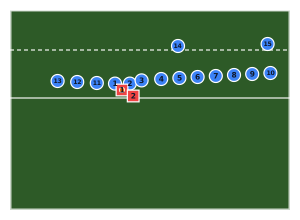
Rugby · Defence · 15 of your players and 2 opponents
Tries are conceded a metre from the breakdown by the two players who assumed somebody else had it. This template puts those two on the picture first, with the opposition ruck drawn in.
Opens on a rugby pitch with the shape already drawn. Free, no signup.
Pillar, post, then everybody else
Seventeen players are on this pitch: your fifteen, plus the opposition ruck and their scrum-half drawn as squares so you can see what you are defending. The ruck sits about 28 m across and 20 m out from the try line — two metres inside your own 22, which is exactly where these mistakes cost seven points.
Two pillars stand either side of the ruck, less than two metres off it and about 4 m apart. The post defender is next out, a further 3 m wide. From there seven defenders spread across the open side at roughly 4.5 m intervals to the touchline, three cover the blind, and the fullback and a winger sweep deep, back inside the 10 m mark. The open-side line is set a touch deeper the wider it goes — about a metre and a half of stagger from the post out to the wing. That is a drift starting position, not sloppy drawing.
The phase where this decides the try
This is the picture for the second and third phase inside your own 22, when the opposition are going through the middle and looking for a soft edge. Their scrum-half picking and going at the pillar is the most rehearsed play in junior rugby precisely because the pillar is usually the last man to arrive and the least sure of the job.
It is the wrong picture for a wide phase, where the ruck is on the 15 m line and there is no meaningful blindside to hold three players. Slide the whole shape across and you will see the blindside three become two and then one.
Non-negotiables
- First two there are the pillars. Whoever arrives, in whatever jersey number. Move the two markers to the players your side actually has near the ball and it stops being a positional argument.
- Post is square, not drifting. Animate a pick-and-go into the post's inside shoulder, then watch what happens when they have already turned outwards.
- Somebody counts the blindside. Three is a plan. Two is a decision. One is a try.
Take this into the designer, drag the ruck to where your team keeps getting hurt, and draw the attack you keep conceding to.
Also known as
- defence
- ruck
- pillar
- post
- guard
Shapes to look at next
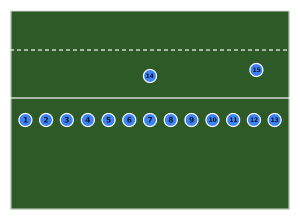
Defensive line (13 up, 2 back)
Rugby · Defence · 15 players
Thirteen in the front line at roughly 5 m spacing right across the pitch, with the fullback sweeping behind and the blindside winger holding the back field. The default defensive picture from a phase in the middle of the park.
Read the setup
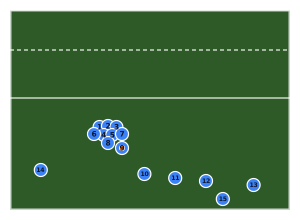
Attacking backline from a scrum
Rugby · Attack · 15 players
A full fifteen: eight bound into the scrum, the scrum-half at the base, and the backline fanned out to the open side roughly 8 m apart with the fly-half 10 m off the gain line. The blindside winger and fullback cover behind.
Read the setup
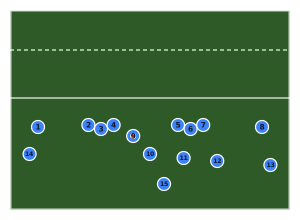
Attacking pods (1-3-3-1)
Rugby · Attack · 15 players
The forwards distributed across the field as one, three, three and one: a forward in each 15 m channel and two pods of three between them, with the halves, centres and back three in behind. Note the digits count players *across* the pitch, not lines of depth — 1-3-3-1 is a width map, which is exactly why it keeps a pod available on both sides of every ruck.
Read the setup
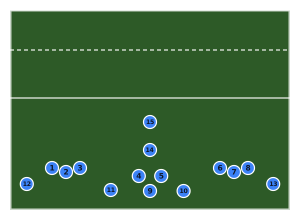
Kick-off receive
Rugby · Set piece · 15 players
Receiving the restart: the forwards in two pods of three with a pair in the middle, all standing at least 10 m back from halfway where the ball has to land, the halves behind them and the outside centre and fullback covering the deep kick.
Read the setup
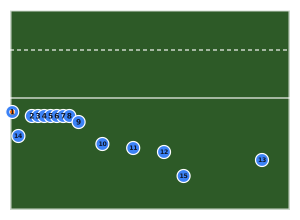
Lineout (7-man)
Rugby · Set piece · 15 players
Seven forwards formed between the 5 m and 15 m lines with the hooker throwing from the touchline, the scrum-half receiving just outside the 15 m line and the backs stacked behind. Where the whole line stands is the bit coaches get wrong on a whiteboard, so it is drawn to the marks.
Read the setup
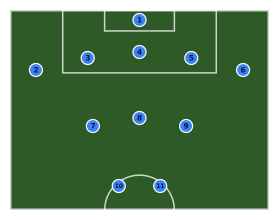
5-3-2 low block
Soccer · Defence · 11 players
A back five dropped onto the edge of the six-yard box with a midfield three in front and two strikers held back for the counter. What you set up when you are protecting a lead.
Read the setup
Put the Ruck defence: pillar and post on a pitch
It opens with the shape already drawn. Move the players your team does differently, drag the runs, and send your squad a link that animates.
Open in PlaymakerPage updated · Rugby play designer · All templates