Infield in, because the run matters more than the out
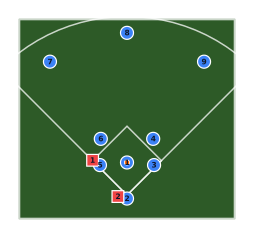
Baseball · Defence · 9 of your players and 2 opponents
A runner on third in a one-run game and four infielders standing on the grass. The ground ball that was a comfortable out is now a play at the plate, and every one of them has to know it before the pitch.
Opens on a baseball pitch with the shape already drawn. Free, no signup.
Where the four of them go
All four infielders come forward, and they do not come forward equally. First base and third base are in at about 75 ft, close enough to field a squeeze bunt and short enough to make a hitter think about it. The second baseman and the shortstop are at about 115 ft, well onto the grass and about 35 ft in front of where they normally stand.
The outfield stays deep at 285 to 300 ft, which is the part people forget to draw. Nothing about a runner on third changes what a fly ball does, and pulling the outfield in as well turns a single into a triple and the tie into a loss. The eleven figures here include the runner on third and the batter, so the whole reason for the alignment is on the same picture as the alignment itself.
The moment that calls for it
One run in the game, a runner on third, and the out is worth less than the run. Late innings, mostly, and only with an infield that can actually make the throw home under pressure.
Be honest about what you have given away. At 75 and 115 ft the fielders have far less time to react, a hard ground ball goes past them that they would have handled at standard depth, and the hole between the corner and the middle infielder is bigger than it looks from the dugout. Coaches call infield in with runners on second and third and one out and then wonder why an ordinary ground ball tied it up anyway.
What has to be decided before the pitch
- Home, or first. Say it before the pitch and say it for each fielder. A fielder who charges the ball and then decides is the fielder who gets neither out.
- Where the catcher stands, and who backs him up. Draw the throw home and then draw the pitcher moving behind the plate. A throw home that gets away with a runner on second is how a one-run game ends.
- The slow roller. Both corners at 75 ft are there for the bunt and the dribbler. Walk the barehanded play, then draw it.
Take this into the designer, set the throw home, and animate it against the runner you have put on third — the picture will tell you whether the play was ever there.
Also known as
- infield in
- runner on third
- cut the run off
- squeeze
Shapes to look at next
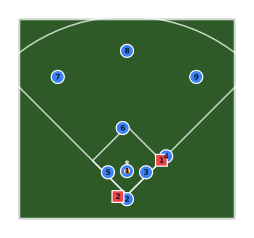
Bunt defence (corners in)
Defence · 11 players
Both corner infielders charge on contact, the pitcher breaks towards the plate, the second baseman covers first and the shortstop takes second. The outfield comes in behind it because nobody is left to back the infield up.
Read the setup
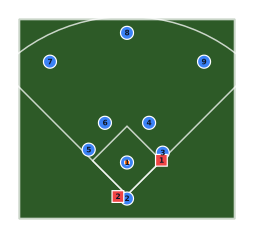
Double-play depth
Defence · 11 players
Runner on first, less than two out: the second baseman and shortstop move in to about 140 ft and shade towards the bag so either can take the feed and turn two. Trades range in the hole for a step less to the base.
Read the setup
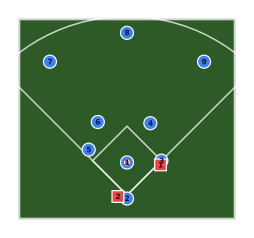
Holding the runner at first
Defence · 11 players
First baseman on the bag for the throw over, second baseman leaning towards the bag to take the steal, shortstop a step across. The hole on the right side is the price of holding the runner close.
Read the setup
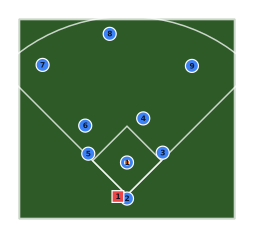
Infield shaded to the pull side
Defence · 10 players
A legal shade against a right-handed pull hitter: third base guards the line, the shortstop slides towards the hole and the second baseman moves towards the bag — but two infielders stay on each side of second, as the rules have required since 2023. The outfield rotates with them.
Read the setup
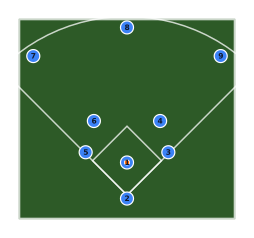
No-doubles defence
Defence · 9 players
Late innings, protecting a lead: the corners guard the lines and the outfielders play deep and towards the gaps. Concedes the single to take the extra-base hit away.
Read the setup
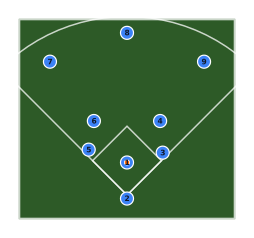
Standard fielding alignment
Defence · 9 players
The nine where they stand with nobody on and nothing to defend against: middle infielders about 150 ft out either side of second, corners in front of their bags, and the outfield at 285-300 ft. Everything else on this list is a change from here.
Read the setup
Put the Infield in on a pitch
It opens with the shape already drawn. Move the players your team does differently, drag the runs, and send your squad a link that animates.
Open in PlaymakerPage updated · Baseball play designer · All templates