No-doubles defence, and the single you agree to give up
Baseball · Defence · 9 of your players
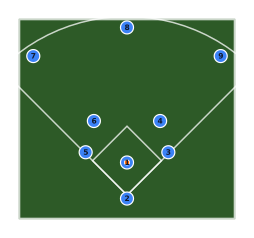
A run up in the last innings, and the only hit that really hurts you is one that lands behind an outfielder or skips into a corner. This alignment hands over everything else.
Opens on a baseball pitch with the shape already drawn. Free, no signup.
The shape of it
Two changes, both of them about the edges of the field. First base and third base move onto the lines at about 110 ft, close enough to the chalk that a ball down the line is knocked down rather than waved at. Behind them, all three outfielders play at about 310 ft — twenty feet off a 330 ft fence — and spread wider than usual, so left and right are protecting the line and the gap at the same time.
The middle infielders stay at their standard 150 ft and the pitcher and catcher do not move. Nine players, no runners on the drawing, because this is an alignment you set before the hitter arrives rather than a reaction to somebody on base.
When a coach calls for it
Late, with a lead you can afford to shave. One run up in the ninth is the obvious case: a runner on first is survivable, a runner on second is not, so every ball that would have been a double becomes the thing you are actually defending.
The cost is deliberate and you should say it out loud to the team. Balls drop in front of the outfielders. The single up the middle goes through because the corners are on the lines. A drawn-in defence gives up hits it would otherwise catch, and the whole justification is that none of those hits puts a runner in scoring position on their own. Call for it two innings too early with a one-run lead and you will have talked yourself into conceding four singles instead of one double.
What to drill
- Angles off the line. A corner infielder on the chalk fields differently: the play is to smother the ball, not to make a highlight. Mark the position, then draw the throw to first from it.
- Who has the gap. With the outfield spread, two fielders can both believe the ball in the gap is theirs. Draw both routes and let them see the collision before it happens.
- The relay in. From 310 ft the throw home is a two-man job. Put the cutoff man on the drawing and animate the throw so it goes to where he will be standing.
Open the alignment, add a runner or two of your own, and draw the relay you would actually run from the fence — that is the part this defence lives and dies on.
Also known as
- no doubles
- late innings
- outfield depth
- guarding the lines
Shapes to look at next
Bunt defence (corners in)
Defence · 11 players
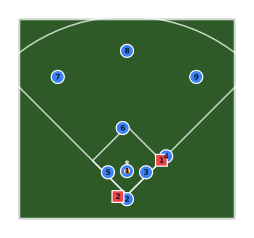
Both corner infielders charge on contact, the pitcher breaks towards the plate, the second baseman covers first and the shortstop takes second. The outfield comes in behind it because nobody is left to back the infield up.
Read the setup
Double-play depth
Defence · 11 players
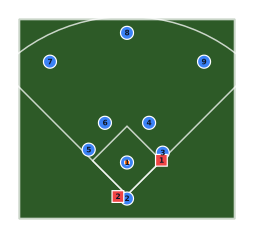
Runner on first, less than two out: the second baseman and shortstop move in to about 140 ft and shade towards the bag so either can take the feed and turn two. Trades range in the hole for a step less to the base.
Read the setup
Holding the runner at first
Defence · 11 players
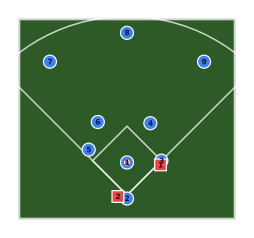
First baseman on the bag for the throw over, second baseman leaning towards the bag to take the steal, shortstop a step across. The hole on the right side is the price of holding the runner close.
Read the setup
Infield in
Defence · 11 players
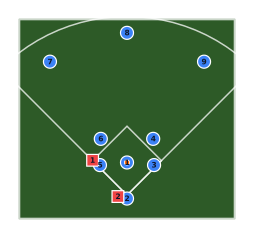
Runner on third in a one-run game: all four infielders move onto the grass to cut the run off at the plate. The ground ball that would have been an easy out is now a play at home.
Read the setup
Infield shaded to the pull side
Defence · 10 players
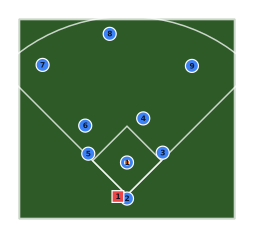
A legal shade against a right-handed pull hitter: third base guards the line, the shortstop slides towards the hole and the second baseman moves towards the bag — but two infielders stay on each side of second, as the rules have required since 2023. The outfield rotates with them.
Read the setup
Standard fielding alignment
Defence · 9 players
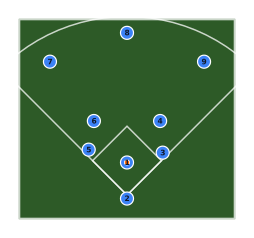
The nine where they stand with nobody on and nothing to defend against: middle infielders about 150 ft out either side of second, corners in front of their bags, and the outfield at 285-300 ft. Everything else on this list is a change from here.
Read the setup
Put the No-doubles defence on a pitch
It opens with the shape already drawn. Move the players your team does differently, drag the runs, and send your squad a link that animates.
Open in PlaymakerPage updated · Baseball play designer · All templates